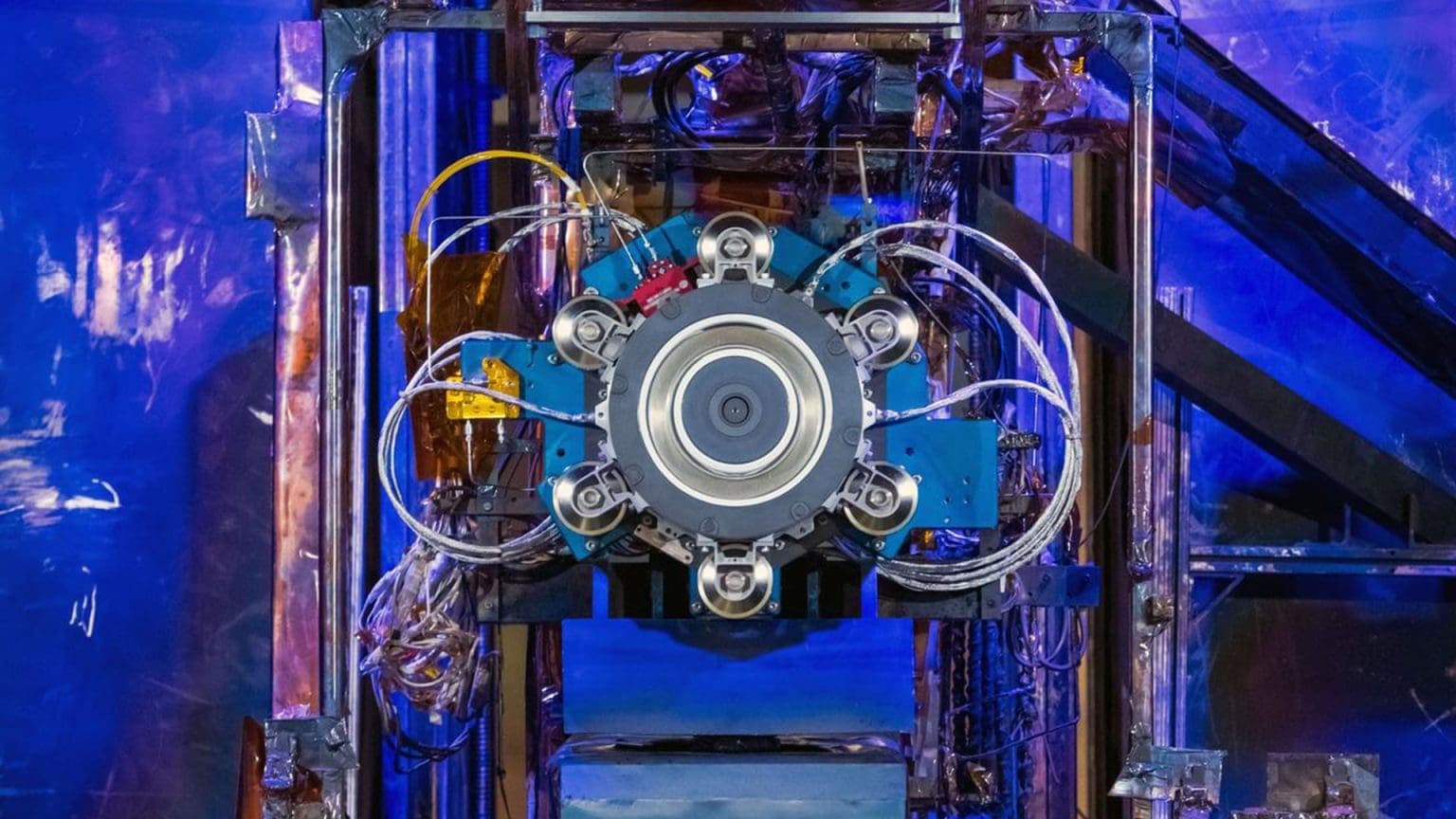
The Advanced Electric Propulsion System (AEPS) Thruster for the Gateway Lunar Space Station
July 23, 2026
As humanity prepares to establish a long-term presence around the Moon, spacecraft need powerful and efficient technologies capable of operating far from Earth. One of the key technologies supporting NASA’s Gateway lunar space station is the Advanced Electric Propulsion System (AEPS), an advanced propulsion system designed to help move and maintain the station in its unique lunar orbit.
Unlike traditional chemical rocket engines that produce large amounts of thrust for short periods of time, electric propulsion systems work differently. The AEPS uses electric power to accelerate charged particles, creating a highly efficient stream of exhaust. While the thrust is relatively small compared with conventional rocket engines, the system can operate for long periods, allowing the spacecraft to gradually build up significant changes in velocity while consuming far less propellant.
This efficiency is especially important for Gateway, which will orbit the Moon in a highly elliptical near-rectilinear halo orbit. The station’s propulsion system will help support orbit maintenance and other spacecraft operations while conserving valuable resources.
The AEPS thruster represents an important advancement in space propulsion technology. By combining high efficiency with long-duration operation, electric propulsion can help spacecraft travel farther and operate longer while carrying less propellant. This creates new possibilities for missions beyond the Moon and, eventually, for human exploration deeper into the solar system.
As Gateway becomes part of NASA’s Artemis exploration architecture, technologies such as the AEPS will play an important role in supporting the station’s operations. The system demonstrates how innovative propulsion technologies can help build the foundation for a sustainable human presence in deep space and support future missions to the Moon, Mars, and beyond.